TRYING OUT ISOPROPYL SOLUTION FOR A MARBLE EFFECT
(JAN 27TH 2026)
So, I had this idea… I wanted to paint an Indian girl, but with a twist — I dreamed of giving her dress that soft, dreamy, flowy chiffon effect. You know, the kind of fabric that looks like it’s dancing in the wind. ✨
To achieve that gentle fluidity, I did what any curious artist would do: I went straight down a YouTube rabbit hole! I found some fascinating videos showing how artists use isopropyl solution and alcohol inks to create beautifully delicate, flowing textures.
The only problem? I didn’t actually have alcohol inks.
What I did have, however, was acrylic paint. So naturally, I wondered… could acrylics work in the same way?
Turns out — yes, they can… but not quite how I expected! The results were definitely different, and as I later discovered, acrylic paint behaves in its own unique way when mixed with these techniques.
Before jumping in, I decided to do a bit of homework first. Was it really okay to water down acrylic paint and apply it directly onto canvas?
The simple answer: not really.
I learned that you can’t just mix acrylic paint with lots of water and expect it to behave nicely on an unprepared surface. Too much water can weaken the acrylic binder, which may lead to poor adhesion, paint lifting or peeling over time, and even a dull, chalky finish.
So, off I went on a little art supply adventure. I bought some gesso, isopropyl solution, and an art blower (more on those last two very soon!) and began by priming my canvas properly.
Now, if you’re wondering…
What exactly is gesso?
Gesso is a primer — usually white — that’s used to prepare surfaces like canvas, wood, or board before painting with acrylics or oils. It creates a slightly textured, absorbent surface that helps the paint adhere beautifully. It also protects the canvas fibres, prevents the paint from soaking in unevenly, and provides a strong, long-lasting foundation for your artwork.

I gave my canvas panel two coats of gesso, making sure each layer dried completely before applying the next. The finish was beautifully smooth — I was honestly amazed at how well it dried, with barely any visible brush marks at all.
With the canvas perfectly prepped, I couldn’t wait to get started on the fun part: mixing the acrylic paint with the medium.
I used a ratio of one part acrylic paint to one part medium… and looking back, it was definitely a little too thick! I tried adding a few drops of water to loosen it up, but in hindsight, I probably should have added more medium instead for a better, more fluid consistency.
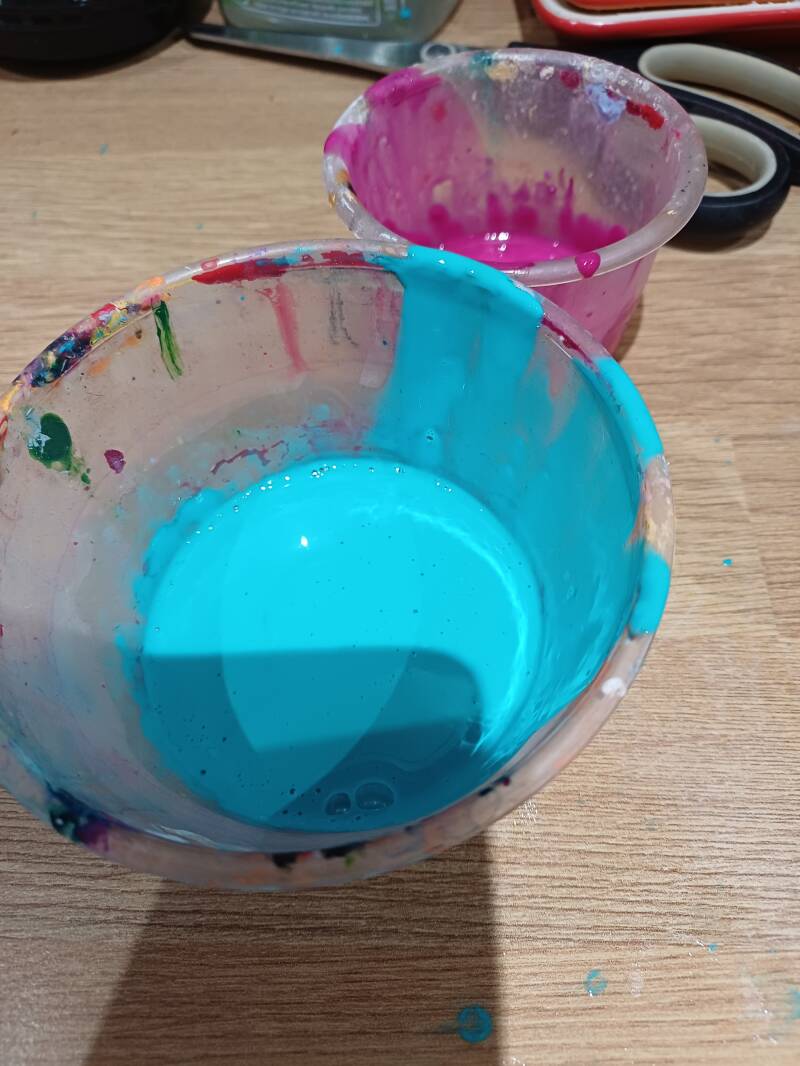
NB : You can see here the pigment was so vibrant ! I used the professional art studio series but you can use whatever you have to hand - just remember the more "watery" the paint the less medium you need as it may cause the colors to mix immediately and create a "muddy" look instead of distinct marble swirls - as I later found !
Next came the really fun part: experimenting!
I grabbed a teaspoon (I didn’t have a pipette handy, so I had to improvise!) and dropped a couple of spoonfuls of my acrylic-and-medium mixture onto the gesso-primed canvas. Then, I added a few drops of isopropyl solution… and instantly watched the paint begin to disperse and move in the most fascinating way.
To guide it further, I used a small air blower tool (another brilliant YouTube discovery!) and gently blew the paint in the direction I wanted it to flow.
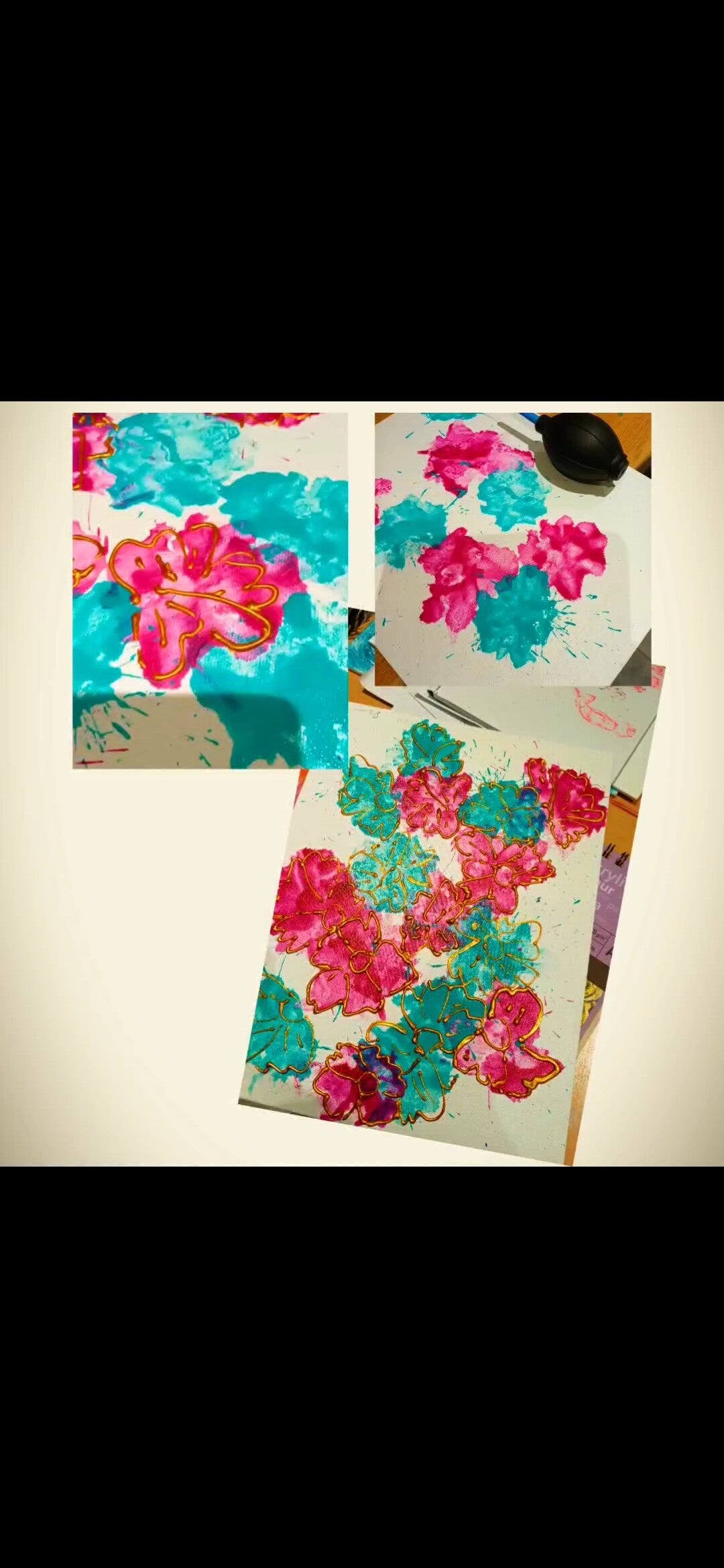
It was so much fun to watch it transform in real time. Although the effect turned out very different from what I originally imagined, it created these amazing cell-like formations instead — almost like little blooming patterns appearing on their own.
To me, they looked a bit like flowers, so once everything was dry, I decided to lean into it. I added some swirly, petal-like details using my 3D gold glue, and I was honestly so pleased with how it all came together.
Let me know what you think in the comments — I’d love to hear your thoughts! 😊✨
A guide for beginners on paintbrushes (thank me later!)
(FEB 26TH, 2026)
Hey folks !!!! Hope youre all doing well!
So i came across this wonderful piece of advice on different types of brushes and what to use them for !!! Its a great guide so you can get rhe correct look you want ! Hope it helps 🙂🙂🙂

Add comment
Comments